
0%

China has become a major production base for Residential Lighting Fixtures, serving apartments, villas, hotels, and smart-home projects worldwide. Its manufacturers range from large integrated factories to specialized designers producing pendant lights, downlights, wall lamps, and architectural systems.

The opportunity is measurable. The International Energy Agency reports that lighting represents roughly 15% of global electricity consumption. The U.S. Department of Energy states that LED products can use at least 75% less energy and last up to 25 times longer than incandescent lamps. These figures explain why buyers increasingly examine LED efficiency, thermal management, dimming performance, and lifetime ratings.

This guide reviews China’s leading residential lighting manufacturers through practical criteria. These include product consistency, optical design, factory capability, customization, quality control, certifications, and after-sales support. Relevant evidence may include LM-79 or LM-80 testing, ISO 9001 systems, CCC compliance, and applicable CE or RoHS documentation. Certifications matter.

A strong catalog alone is not enough. Some suppliers offer attractive samples but struggle with color consistency during mass production. Others provide competitive prices but limited engineering support. That difference becomes visible when a warm-white pendant appears slightly green across a living room.

A ranking is never perfectly objective. Project requirements, shipping terms, installation conditions, and budget can change the best choice. Therefore, this overview emphasizes verifiable manufacturing experience rather than promotional claims. It aims to help importers, developers, designers, and distributors compare reliable Chinese suppliers with clearer expectations and fewer costly surprises.
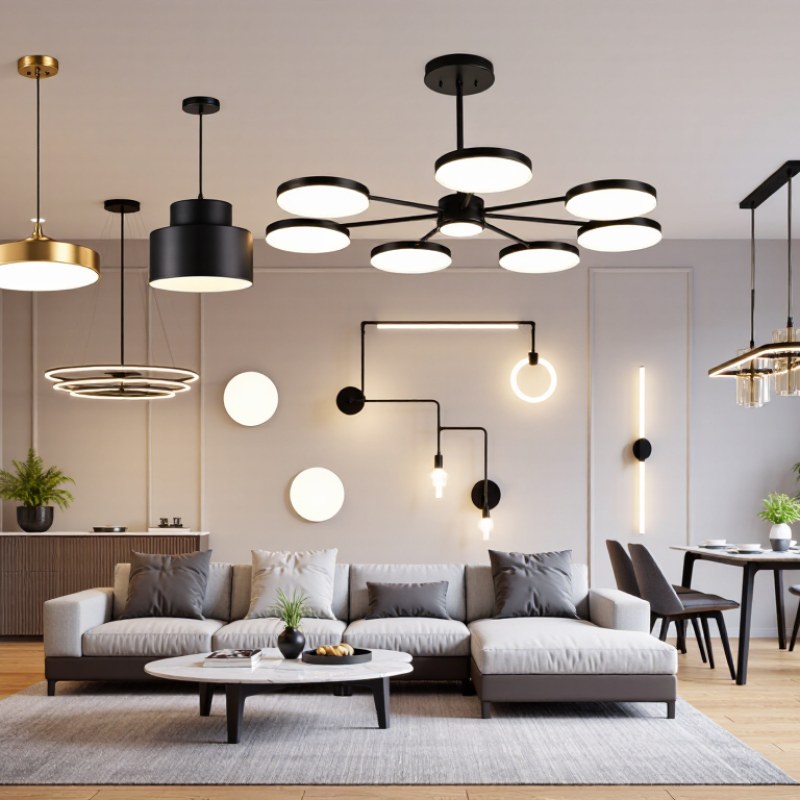
China Top Residential Lighting Fixtures Manufacturers?

Residential Lighting Fixtures: Definition, Types, and Applications

Residential lighting fixtures are products designed to hold, distribute, and control light inside homes. They include ceiling lights, wall sconces, pendant lights, recessed lamps, track systems, table lamps, and floor lamps. Each type serves a different visual and practical purpose. A recessed fixture can create a clean ceiling line. A pendant can place focused light above a dining table. Wall lighting often softens dark corridors and bedrooms.

Applications depend on room size, ceiling height, activities, and surface colors. Kitchens need bright task lighting above counters and sinks. Living rooms usually benefit from layered lighting, combining ambient, task, and accent sources. Bedrooms require softer illumination, especially near beds and wardrobes. Bathrooms demand careful moisture protection and suitable ingress ratings. I have found that color rendering also matters. Food, wood, and painted walls can look noticeably different under poor-quality light. Small details matter.

When evaluating Chinese residential lighting fixture manufacturers, buyers should inspect material samples, photometric data, thermal performance, and electrical testing documents. Reliable suppliers should explain lumen output, color temperature, beam angle, dimming compatibility, and expected service life clearly. A polished catalog is not proof of consistent production. Factory visits, sample testing, and batch inspections provide stronger evidence. One common mistake is choosing a fixture by appearance alone. I have seen attractive fittings create glare, visible flicker, or difficult maintenance problems. Even experienced teams sometimes overlook installation access. That deserves another review.

China’s Residential Lighting Manufacturing Landscape

China’s residential lighting manufacturing landscape is broad, export-driven, and highly specialized. The China Association of Lighting Industry reports that LED products remain the dominant technology in domestic production. China also supplies more than 70% of global lighting products, according to industry estimates. This scale supports competitive pricing, fast tooling, and flexible customization.

Mordor Intelligence projects China’s LED lighting market to grow at over 8% annually between 2024 and 2029. The demand is shifting beyond basic ceiling lamps. Buyers now request dimming, warmer color temperatures, compact drivers, and lower glare. The International Energy Agency’s 2024 energy-efficiency report also identifies LEDs as more than half of global lighting sales. However, factory capability varies widely. Not every supplier controls its driver quality. The weak point is consistency. I would not trust a catalog alone.

Tips: Ask for LM-80 data, flicker measurements, thermal testing, and a sample assembled on the real production line. Check the factory’s monthly capacity, aging-test records, and export inspection process. For residential projects, compare 2700K, 3000K, and 4000K samples in an actual room. A beautiful sample can still hide uneven color, noisy drivers, or weak surface finishes. Reflective finishes are especially difficult to judge from photographs.

Criteria for Evaluating Leading Chinese Lighting Manufacturers

Evaluating leading Chinese residential lighting manufacturers requires more than comparing catalog prices.

Start with production experience. Review how long the factory has made residential fixtures, which materials it handles, and whether its workshops support consistent volume. Ask for recent project samples, not only polished showroom pieces. A well-made ceiling light should have even diffusion, stable color temperature, secure wiring, and clean finishing around every edge.

Technical capability matters. Check photometric files, LED binning information, driver specifications, and heat-management tests. Request test reports from recognized laboratories, then confirm that the documents match the actual model. Compliance with applicable safety and environmental requirements should be verifiable for the target market. Factory audits can reveal useful details, such as soldering quality, aging-test areas, and carton-drop procedures. Small details often expose larger weaknesses.

Reliability also depends on communication and control systems. Evaluate sample approval records, inspection checkpoints, batch traceability, spare-part access, and warranty handling. Ask how the manufacturer responds when a shipment contains color variation or damaged shades. Delays happen. Honest suppliers explain the cause and corrective action clearly. No factory performs perfectly, and that deserves attention. A supplier that records rejected units may be more trustworthy than one claiming zero defects. Before a large order, test a pilot batch under real household conditions, including dimming, heat, installation time, and daily switching.

Notable China-Based Residential Lighting Fixture Manufacturers

China has become a major source of residential lighting fixtures for global housing projects. Notable China-based manufacturers often combine design engineering, metal processing, and assembly under one production system. Their catalogs cover pendant lights, wall sconces, ceiling fixtures, table lamps, and outdoor residential fittings. Many factories support custom dimensions, finishes, color temperatures, and packaging for overseas distributors.

That flexibility matters.

Experienced buyers usually inspect more than a polished product photograph. They request samples, wiring diagrams, photometric data, and test reports before approving volume production. Reliable manufacturers can explain LED driver selection, heat management, ingress protection, and dimming compatibility in practical language. A well-run facility also documents incoming materials, assembly checks, aging tests, and final inspections.

Details reveal discipline.

The strongest China-based partners typically maintain export teams familiar with regional electrical standards and documentation. They may offer factory audits, sample revisions, and traceable production records, reducing avoidable installation problems. Still, a low quotation can hide thinner metal, inconsistent coating, or limited after-sales support. In practical evaluations, finish samples under warm and cool light reveal differences catalog images miss.

One weakness remains.

Communication can slow when technical terms are translated loosely, so written drawings and approval records are essential. A careful evaluation should balance price, appearance, safety evidence, lead time, and service rather than chasing the lowest offer.

How to Select a Suitable Chinese Lighting Supplier

Selecting a suitable Chinese residential lighting supplier requires more than comparing catalog prices. The U.S. Department of Energy reports that LED lighting uses at least 75% less energy than incandescent lamps and can last up to 25 times longer. Ask suppliers for measured lumen output, color temperature, beam angle, and lifetime data. Do not rely only on attractive product photos.

Check technical competence through documentation. A reliable manufacturer should provide IEC 60598 safety test reports, ISO 9001 quality records, photometric files, and traceable component information. For LED lifetime claims, request LM-80 and TM-21 evidence where applicable. Reports should come from laboratories recognized under ILAC arrangements or equivalent accreditation systems. Details matter. A warm white lamp may look different at 2700K and 3000K, especially on painted walls.

Factory verification is equally important. Review production lines, aging-test racks, incoming inspection procedures, and packaging controls through a live video audit or independent inspection. The International Energy Agency has repeatedly identified efficient lighting as a practical energy-saving measure, but efficiency alone does not guarantee comfort or durability. Check flicker performance, glare control, dimming compatibility, and warranty response times. A supplier may promise three weeks, then struggle with replacement parts. This risk is easy to overlook. Start with a small sample order, compare measured results with the quotation, and record every tolerance before signing a larger agreement.

China Top Residential Lighting Fixtures Manufacturers? - How to Select a Suitable Chinese Lighting Supplier

Evaluation Dimension Recommended Benchmark How to Verify Why It Matters for Residential Lighting Suggested Weight
Product Category Coverage At least 3 relevant categories, such as ceiling lights, pendant lights, wall lights, downlights, track lights, or table lamps Review the current product catalogue, technical drawings, and recent residential project references A broader product range can simplify design coordination and reduce the number of suppliers required for one project 10%
Applicable Safety Standards Products should be designed and tested against applicable standards, including IEC 60598-1 for general requirements and relevant product-specific parts Request test reports showing the exact model, rated input, laboratory details, and standard edition Compliance reduces electrical, thermal, mechanical, and installation risks 15%
Target-Market Certification Certification and declarations must match the destination market, such as CE for applicable European requirements or UKCA for applicable Great Britain requirements Check certificates, declarations of conformity, product markings, and technical files where legally required A certificate for one market does not automatically satisfy the legal requirements of another market 15%
Photometric Performance Provide LM-79 or equivalent photometric data where applicable; compare lumen output, beam angle, light distribution, and power consumption Request an electronic photometric file, test report, and sample measurement under the stated operating conditions Accurate photometric data supports lighting calculations and helps prevent under-lighting or excessive glare 12%
Color Quality Specify correlated color temperature, color rendering index, and color consistency; residential applications commonly use 2700K–4000K depending on the room and design Check the datasheet, sample, binning information, and independent test results Consistent color appearance is important when multiple fixtures are installed in the same space 10%
Flicker and Glare Control Driver and optical design should meet the project’s flicker, glare, and visual-comfort requirements Request flicker test data, driver specifications, UGR data where relevant, and inspect samples at dimmed and full output Poor flicker or excessive glare can reduce comfort in bedrooms, living rooms, offices, and study areas 8%
Driver and Dimming Compatibility Clearly state input voltage, frequency, dimming method, power factor, and compatibility with the intended control system Test the sample with the actual wall dimmer, smart control, or building automation system before approval Compatibility problems may cause flicker, noise, limited dimming range, or premature driver failure 10%
Quality Management System A documented quality system, preferably supported by a valid ISO 9001 certificate covering the relevant manufacturing scope Verify the certificate issuer, validity period, factory address, and scope of certification A controlled process improves consistency in components, assembly, inspection, and corrective actions 8%
Sample-to-Mass-Production Consistency The approved sample, bill of materials, packaging, and production unit should be formally controlled Approve a golden sample, inspect pre-production units, and define change-notification procedures in the purchase contract Unauthorized substitutions can change light output, safety performance, appearance, or service life 10%
Material and Environmental Compliance Materials should comply with the destination market’s chemical and environmental requirements, such as RoHS where applicable Request declarations, material test reports, and component-level compliance evidence Compliance supports legal sales, responsible procurement, and documentation for building projects 5%
Customization Capability Able to support agreed changes in dimensions, finish, color temperature, beam angle, mounting method, packaging, or control options Evaluate engineering drawings, prototype lead time, tooling terms, and sample approval procedures Customization helps match architectural details and local electrical requirements 3%
Commercial and Logistics Reliability Written quotation should identify Incoterms, lead time, payment terms, packaging, warranty, spare parts, and after-sales responsibilities Compare the quotation with the purchase contract and confirm production capacity before placing the order Clear commercial terms reduce delivery disputes and make total landed cost easier to calculate 4%
Total Suggested Evaluation Weight 100%

Note: Certification, testing, warranty, lead time, and performance requirements should always be confirmed for the exact product model and destination market.

FAQS

What are residential lighting fixtures?

Residential lighting fixtures hold, distribute, and control light inside homes. Common types include ceiling, pendant, recessed, wall, table, and floor fixtures.

Which fixture suits a dining table?

A pendant fixture can provide focused light above the table. Its height should support comfortable viewing without blocking conversation.

How should lighting choices differ by room?

Kitchens need bright task lighting above counters and sinks. Bedrooms usually need softer light near beds and wardrobes.

Why is layered lighting useful in living rooms?

Layered lighting combines ambient, task, and accent sources. It can make a room feel brighter without harsh glare.

What should buyers check for bathroom fixtures?

Buyers should verify moisture protection and suitable ingress ratings. Water exposure makes electrical safety especially important.

Which technical documents should a buyer request?

Request photometric files, driver details, wiring diagrams, thermal tests, and electrical testing documents. Confirm that each document matches the actual model.

Why should buyers test samples before placing large orders?

Samples can reveal flicker, glare, uneven diffusion, and difficult installation. A pilot batch should also test dimming, heat, and daily switching.

Does a low quotation prove good value?

No. A low price may hide thinner metal, uneven coating, or weak after-sales support. Appearance alone is not enough.

How can buyers evaluate production reliability?

Review inspection checkpoints, batch records, aging tests, and rejected-unit records. No factory performs perfectly, so corrective action matters.

What prevents misunderstandings during international lighting projects?

Use written drawings, approval records, and clear technical terms. Translated details can become vague. Recheck dimensions, finishes, and color temperature.

Conclusion

Residential Lighting Fixtures play an important role in creating comfortable, functional, and visually appealing home environments. This article explains their definition, common types, and applications across living rooms, bedrooms, kitchens, bathrooms, dining areas, and outdoor residential spaces. It also introduces China’s residential lighting manufacturing landscape, highlighting the industry’s broad production capabilities, varied product designs, customization options, and ability to serve different market requirements.

The article further outlines practical criteria for evaluating leading Chinese lighting manufacturers, including product quality, material selection, safety compliance, design flexibility, production capacity, quality control, communication, delivery reliability, and after-sales support. It also discusses the types of China-based manufacturers buyers may consider without focusing on specific brand names. Finally, it provides a structured approach to selecting a suitable Chinese lighting supplier by comparing product portfolios, requesting samples, verifying certifications, reviewing manufacturing capabilities, clarifying pricing and lead times, and establishing clear cooperation terms.

Ethan

Ethan

Ethan is a professional marketing specialist with a strong understanding of the company’s products, customers, and industry landscape. Through his work, he helps translate complex product capabilities into clear, practical, and valuable information for businesses and everyday users. With a......